Why cosmetic labels matter more in 2026
Every cosmetic sold in India is regulated under the Drugs and Cosmetics Act, 1940 and the Cosmetics Rules, 2020. Imported cosmetics need a registration certificate from the Central Drugs Standard Control Organisation (CDSCO); cosmetics made in India need a manufacturing licence from the state (CDSCO, Cosmetics).
In an order dated 24 August 2026, CDSCO cancelled three cosmetic import registrations of a Delhi importer. The reported findings included stocking products without valid registration, printing incorrect registration numbers on labels, and moving its warehouse without telling the licensing authority (Medical Dialogues). Reports describe the company as an importer of Korean beauty brands (StartupTalky).
In June 2026, Maharashtra's FDA seized a suspected counterfeit batch of a well-known cleanser from a Pune retailer (Punekar News). In September, CDSCO warned consumers against two unregistered face creams labelled as made in Pakistan, which contained heavy metals above the specified limits (Medical Dialogues). The lesson for shoppers: the label is your first and cheapest test.
The five lines to check on any serum or cream
- Manufacturing licence number (made in India) — printed after "M", "M.L. No" or "Mfg. Lic. No." — or, for imports, the import registration number after "RC" or "Reg. Cert. No.", with the name and address of the Indian registration holder (J. Cosmet. Sci. review of Indian rules).
- Batch or lot number — so a bad batch can be traced and recalled.
- Use-before or expiry date — CDSCO lists missing batch number, licence number or expiry date among the common label failures it sees (CDSCO, general non-compliances).
- Maker's name and address — a real company you could write to.
- A full ingredient list under the word "Ingredients", in standard (INCI) names — so you can see what is actually inside, and how high your hero ingredient sits.
Very small packs (around 10 g or 25 ml and under) may be exempt from some lines such as the batch number, so judge minis by where you bought them.
Red flags that should stop you
- Promises to change your complexion on an unbranded cream — the Cosmetics Rules prohibit mercury compounds in cosmetics, yet heavy-metal creams still turn up through social media (J. Cosmet. Sci.).
- A foreign-language-only label with no Indian importer sticker — imported cosmetics must carry the Indian registration number and holder's details.
- Medical words — "cures", "treats", "regrows". A cosmetic may not be marketed as a drug; CDSCO has cancelled import registrations for exactly that (Medical Dialogues).
- A price far below MRP from an unknown seller — ask for the bill with batch and expiry.
How Skandoir labels its serums
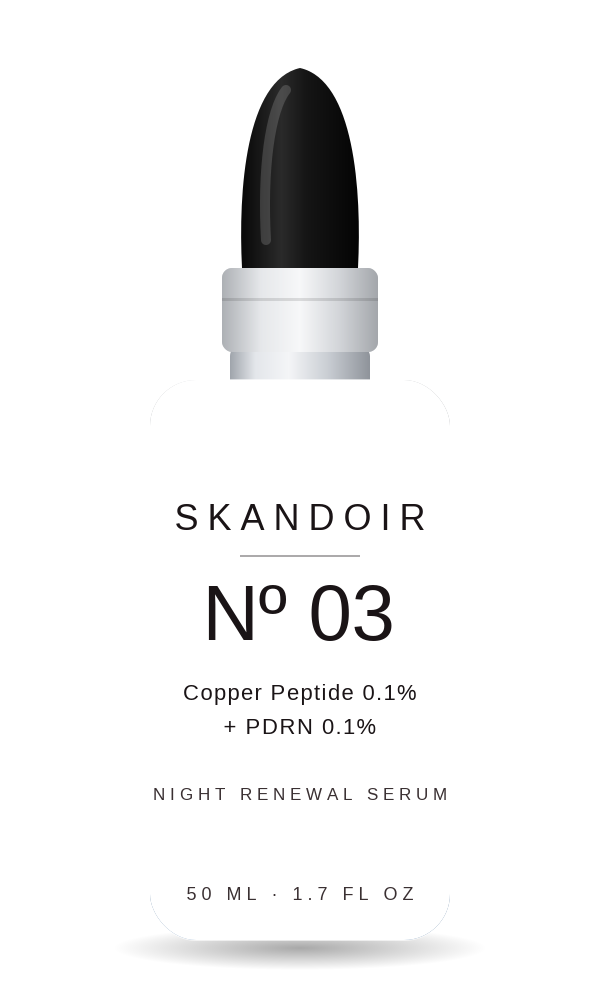
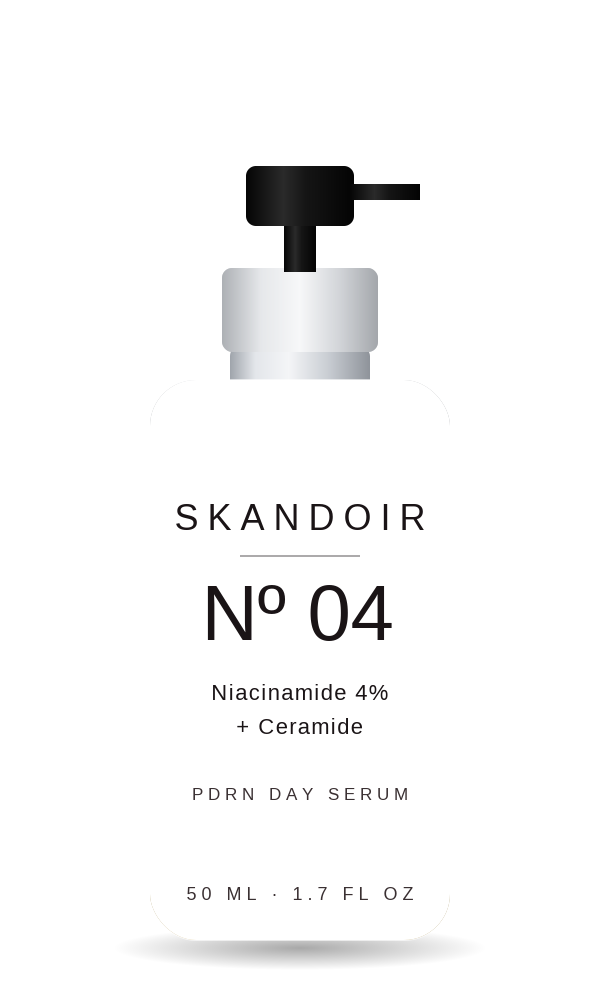
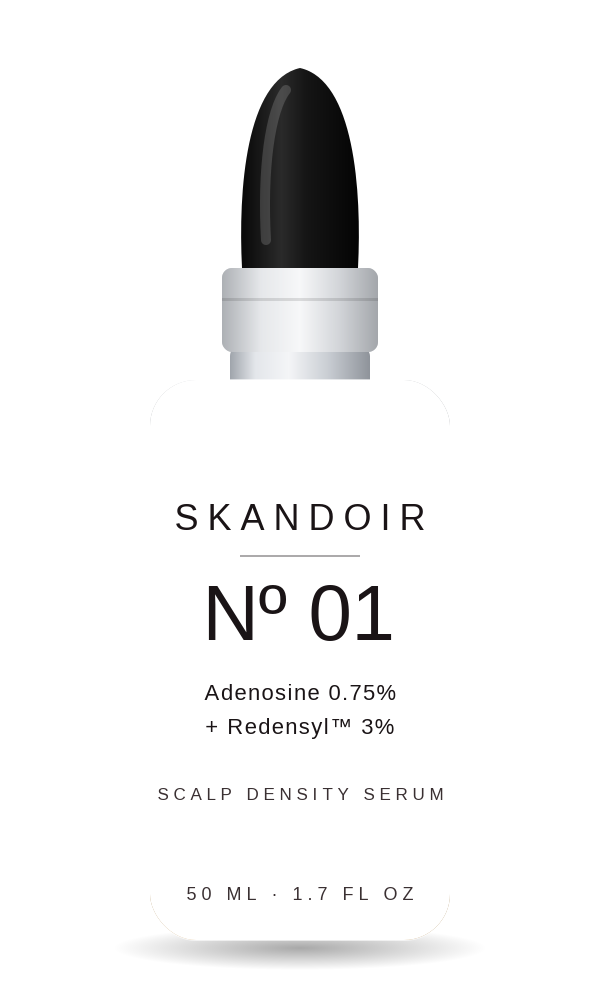
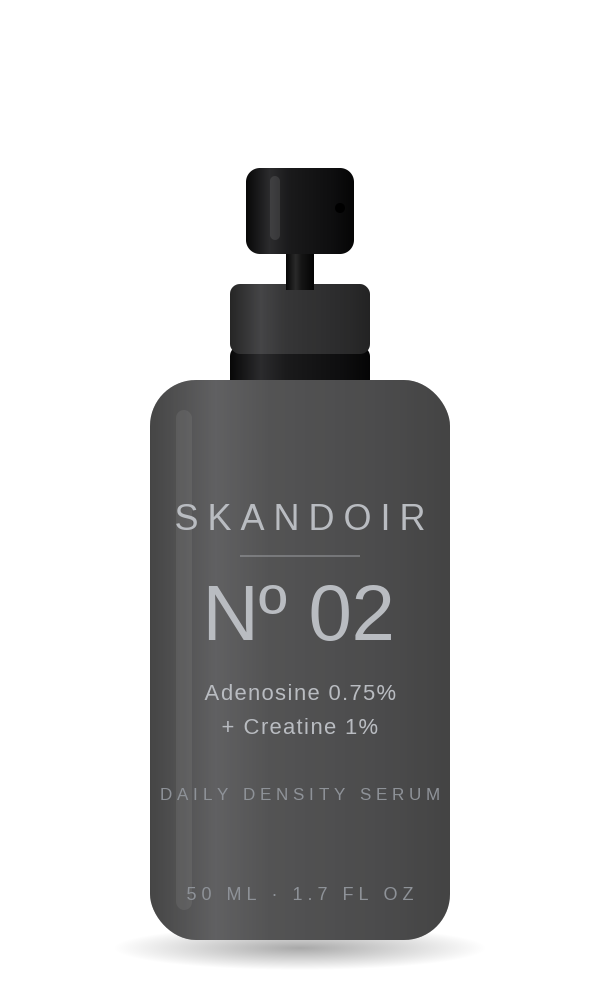
Skandoir is Korean skin science, made in Chennai — not an imported Korean product. Our serums are made by a Chennai contract manufacturer, so the line to look for on a Skandoir bottle or carton is a manufacturing licence number, not an import registration. You will also find a batch number, a use-before date, the maker's and marketer's names and addresses, and the full INCI list with each hero ingredient's percentage on the front.
Hold us to the same five lines. If anything is missing on a Skandoir pack, write to us — and do not use it. Compare the four serums on ../compare.html, or start with the colour-coded ../serum-03-copper-peptide-pdrn-night-serum.html.
Lab notes, November 2026: seized creams and misleading beauty ads
Added 26 Nov 2026.
The two Pakistan-made creams CDSCO flagged in September have now been banned in Madhya Pradesh. In an order issued on 14 November 2026, the state Food and Drug Administration said the creams were sold without the required import registration and contained excessive levels of heavy metals that could damage the kidneys. Officials raided two locations in Indore: about 300 packets worth around ₹1.5 lakh were seized from one agency, and several more from a beauty shop (Free Press Journal).
What the regulator told shoppers to check is the same list as this page: the manufacturing or import licence number, the maker's details, the batch number, and the manufacturing and expiry dates. CDSCO's own advice was to buy only authorised cosmetics, and to report label problems to the State Drugs Controller for Indian-made products or to the DCGI for imports (Medical Dialogues).
Added 27 Nov 2026.
This time the raid was at a neighbourhood shop, not a factory. On 23 November 2026, Maharashtra FDA inspectors in Pune seized cosmetics worth about ₹7.30 lakh from a retail cosmetics shop in Kondhwa Khurd. Some products had no licence number; others lacked the manufacturer's name, batch number and date of manufacture. Four samples were sent for laboratory testing — among them a night cream sold as "Korean Glass Skin" and a "24K Gold" cream — and officials said a court case would follow the reports (Punekar News; Free Press Journal).
The FDA's advice to shoppers was, once again, this page's checklist: the maker's name and address, licence number, batch number and expiry date. A "Korean" word on the front proves nothing; the five lines on the back do.
Added 28 Nov 2026.
The label is not the only place to read carefully. The Advertising Standards Council of India's half-yearly report for April–September 2026 found 456 personal care ads in violation of its code — the largest category after offshore betting — and 263 of them were influencer posts. ASCI's named concerns were unsubstantiated skin and hair "transformation" claims about acne, pigmentation, hair fall and dandruff, exaggerated before-and-after visuals, skin-tone transformation claims, and composition and sustainability claims that laboratory findings contradicted. Across all categories, 98% of violations were on digital media (ASCI Half-Yearly Complaints Report, April–September 2026).
So add a sixth check, for the screen rather than the shelf: if a post promises a transformation, shows a dramatic before-and-after or does not say it is a paid partnership, trust the pack's ingredient list and percentages over the video. Anyone can complain to ASCI free of charge at ascionline.in.
How to read a cosmetic label in India: questions and answers
How do I know if a cosmetic is genuine in India?
Check for a manufacturing licence number (Indian-made) or an import registration number with the Indian importer's name (imported), plus a batch number, expiry or use-before date, the maker's address and a full ingredient list. Buy from authorised stores and keep the bill.
What does 'RC No' mean on a cosmetic?
It is the import registration certificate number issued by CDSCO for an imported cosmetic. Imported products sold in India should carry it along with the name and address of the Indian registration holder.
What does 'M.L. No' or 'Mfg. Lic. No.' mean?
It is the state manufacturing licence number of the factory that made the product in India. Indian-made cosmetics should show it on the inner or outer label.
Are Korean skincare products sold in India always imported?
No. Some are imported under a CDSCO registration; others, like Skandoir, use Korean formulation science but are made in India under a state licence. The label tells you which.
Is a complexion cream without a maker's address safe?
Do not use it. Unlabelled creams sold on complexion promises are a known source of heavy-metal contamination, and mercury compounds are prohibited in cosmetics in India.
Where can I report a suspicious cosmetic?
Contact your state's drugs control or FDA office, or the CDSCO website. Keep the pack and the bill.
Sources for this How to read a cosmetic label in India article
- CDSCO — Cosmetics division (import registration)
- CDSCO — General non-compliances observed (labels)
- Medical Dialogues — CDSCO cancels importer's cosmetic registrations (order 24 Aug 2026)
- StartupTalky — importer of Korean beauty brands
- Punekar News — counterfeit cleanser seized in Pune (June 2026)
- Medical Dialogues — CDSCO warns against two Pakistan-made creams over excessive heavy metals (15 Sept 2026)
- Free Press Journal — Madhya Pradesh FDA bans two Pakistan-made creams; 300+ packets seized in Indore (14 Nov 2026)
- Punekar News — Pune FDA seizes cosmetics worth Rs 7.3 lakh from a Kondhwa shop over licence and labelling violations (24 Nov 2026)
- Free Press Journal — Pune FDA seizes misbranded cosmetics worth ₹7.30 lakh in Kondhwa raid (23 Nov 2026)
- ASCI — Half-Yearly Complaints Report, April–September 2026
- Journal of Cosmetic Science — comparative review of Indian cosmetic labelling and heavy-metal rules
- Medical Dialogues — cosmetic marketed as drug, registration cancelled
This page is educational and is not medical advice. Skandoir serums are cosmetics; they are not intended to treat any condition. For skin or hair disease, see a doctor.
Last reviewed: 5 November 2026